Research in Computations and Data-Driven Engineering in CBE leverages artificial intelligence, machine learning, quantum computing, and multiscale modeling to accelerate molecular discovery and optimize complex engineered systems. By replacing traditional trial-and-error methodologies with predictive digital frameworks, faculty are transforming process engineering from the scale of atomic defects up to industrial-scale manufacturing. This computational portfolio is structured around three key methodological domains:
- Biomanufacturing Optimization and Process Control: Department is integrating data analytics, advanced control theory, and high-throughput screening to revolutionize advanced therapeutics. This includes pioneering data-driven workflows to automate and improve the manufacturing of highly personalized autologous Chimeric Antigen Receptor T-cell (CAR-T) treatments and induced pluripotent stem cells (iPSCs). Furthermore, faculty utilize mechanistic and hybrid modeling to drastically expedite downstream process development, optimize the orthogonality of separation systems, and deploy machine learning approaches to perform codon optimization for high-titer cell culture systems.
- Molecular, Biophysical, and Quantum Modeling: At the molecular level, faculty are exploiting cutting-edge computational chemistry and next-generation architecture to design and manipulate functional biomolecules and materials. Key initiatives involve mapping protein surfaces and decode fundamental biophysics, as well as applying quantum computing and AI to modify and enhance enzyme functions for the synthesis of complex glycosaminoglycans (GAGs). Additionally, researchers are exploring the frontline of materials science by applying quantum computing paradigms directly to the design of entirely new functional materials.
- Predictive Transport and Structural Informatics: Computational tools are widely applied to quantify complex physical phenomena and structural relationships. Faculty develop stochastic transport modeling methods and multiscale separation models to understand fluid and mass transport. In solid-state and structural systems, research focuses on the computational quantification of defect chemistry and its explicit effect on gas diffusion in clathrate hydrates. Parallel efforts in structural informatics focus on modeling optical dissymmetry to understand biomolecular chirality and chiroptical responses, effectively enabling the reverse engineering of advanced optical metamaterials.
By uniting statistical data science with rigorous physics-based models, the department's computational research provides the predictive foundation necessary to de-risk experimental engineering, dramatically shortening the timeline between digital design and physical implementation.
Representative research projects in this area are:
- Data analytics and control to improve cell & gene therapeutics manufacturing, with an initial emphasis on autologous Chimeric Antigen Receptor T-cell (CAR-T) treatments (Bequette).
- Data analytics and control to improve the manufacturing of induced pluripotent stem cells (iPSCs) (Bequette).
- Integration of high throughput screening and mechanistic/hybrid modeling for expedited process development (Cramer).
- Multiscale modeling for separation (Cramer).
- Big data machine-learning models for protein surface and biophysics (Cramer).
- Orthogonality of separation systems (Cramer).
- Machine learning approaches to codon optimization for high titer cell culture systems (Cramer).
- AI/Machine Learning and quantum computing to modify enzyme functions to target functional improvement in glycosaminoglycans (GAGs) (Dordick).
- Quantification of the defect chemistry and its effect on gas diffusion in clathrate hydrates (Gorai).
- Computational quantification of structural and optical dissymmetry to understand biomolecular chirality and chiroptical responses and enable reverse engineering (Kim).
- Application of quantum computing to design new materials (Underhill).
- Development of stochastic transport modeling methods (Underhill).
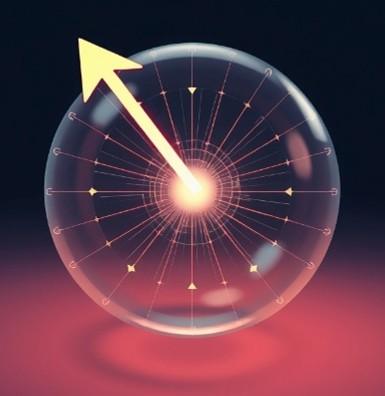
Bloch-sphere Representation of a Quantum Bit (Qubit)
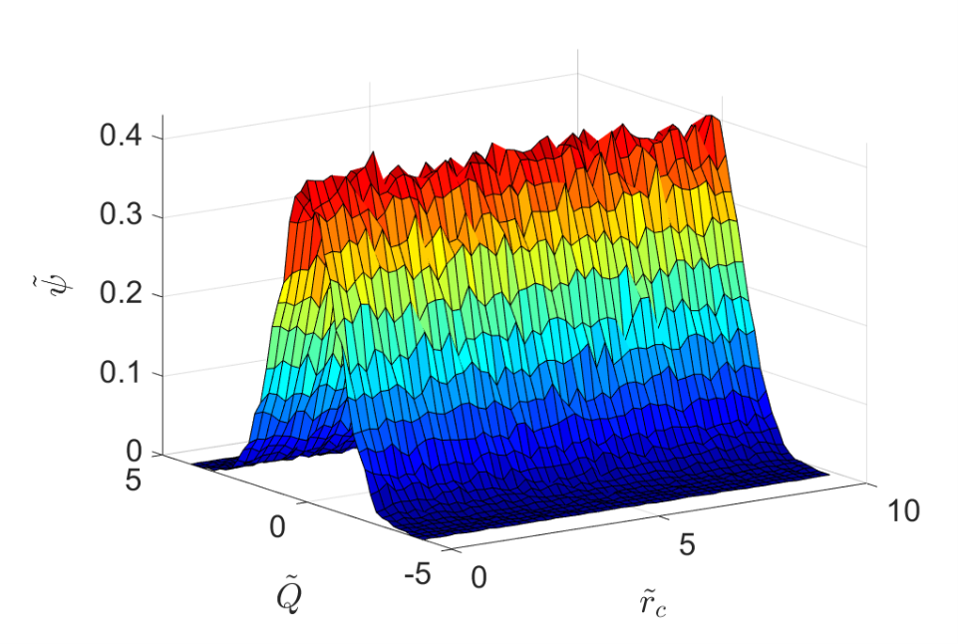
Simulated Fluctuations of a Suspension of Polymers